
"There has been a 0.05 percentage points decline in the share of allocation for child budget to the Union Budget from 2.35 per cent (2022-23 BE) to 2.30 per cent (2023-24 BE).

Few finance ministers announce any taxation measure that could upset the stock market. Ms Sitharaman decided to take that risk, observes A K Bhattacharya.

Ushering in reforms, Union Finance Minister Nirmala Sitharaman on Saturday proposed to open up the nuclear power sector for private players and announced a Rs 20,000 crore Nuclear Energy Mission for research in the field, with an aim to set up five small and modular reactors by 2033.

Bihar Chief Minister Nitish Kumar assured Prime Minister Narendra Modi that he will remain in the NDA, while regretting short-lived alliances with the RJD-Congress combine. He lauded Modi for the Union government's measures for the state and highlighted recent state government initiatives.

High frequency indicators, like vehicles sales, air traffic, steel consumption and GST E-way bills, point towards a sequential pickup in momentum of economic activity during the second half of the fiscal 2024-25 and sustain moving forward, RBI Bulletin said on Wednesday. However, a strong dollar, driven by US economic resilience and trade policy pivots, could exacerbate capital outflows from emerging economies, push risk premiums higher, and intensify external vulnerabilities, said an article on 'State of the Economy' published in RBI's February bulletin.

Finance Minister Nirmala Sitharaman on Wednesday again took a digital tablet wrapped in a traditional 'bahi-khata' style pouch as she headed for Parliament to present Union Budget 2023-24 in a paperless format just like the previous two years. She posed for the traditional 'briefcase' picture outside her office along with her team of officials before heading to meet the President. She, however, was holding a tablet instead of a briefcase to present the Budget in a digital format.

As per the Budget memorandum, the government has proposed amendment to Sub-Section 2 of Section 23 of Income Tax Act, which relates to determination of annual value of house properties.

General Budget is a terminology earlier used to differentiate between the Union Budget with the Railway Budget. Full-fledged budgets are titled "Union Budget", while interim Budgets are titled just that.

Here's how the budget impacts the pocket of the common man.

Of the total proposed allocation, over Rs 1 lakh crore is meant for BSNL and MTNL-related expenses, including Rs 82,916 crore infusion in BSNL for technology upgradation and restructuring at BSNL.

The government should take measures to promote innovation and R&D while simplifying regulations for the sector in the upcoming Union Budget, as per pharmaceutical industry bodies. Outlining the wish list for the sector in the upcoming Union Budget, Indian Pharmaceutical Alliance (IPA) secretary general Sudarshan Jain said the domestic pharma industry is currently around $50 billion in size and aspires to grow to around $130 billion by 2030 and $450 billion by 2047. "To achieve this vision, the Union Budget 2023-2024 should help fuel innovation and R&D, which will set the pace for propelling the pharmaceutical industry forward," he told PTI.

The RBI under new Governor Sanjay Malhotra on Friday cut interest rate for the first time in nearly five years as the central bank pivoted the policy stance to support a shuttering economy. The 25 basis points rate cut to 6.25 per cent comes after last rate reduction in May 2020. The last revision of rates happened in February 2023 when the policy rate was hiked by 25 basis points to 6.5 per cent.
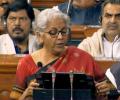
"The budget adopts following seven priorities -- inclusive development, reaching the last mile, infrastructure and investment, unleashing the potential, green growth, youth power and financial sector," she said.

The government has identified 50 public-private partnership (PPP) projects worth over Rs 60,000 crore, significantly surpassing the original targets of the National Monetisation Pipeline, said Ports, Shipping, and Waterways Minister Sarbananda Sonowal at the Business Standard Infrastructure Summit on Thursday.

The interest rate on these schemes have remained unchanged for over a year now.

The government will provide Rs 11.11 lakh crore for capital expenditure for 2024-25 and introduce viability gap funding to spur private investment in infrastructure, Finance Minister Nirmala Sitharaman said on Tuesday. Presenting the Union Budget for FY2024-25, she said that the government will endeavour to maintain strong fiscal support for infrastructure over the next five years, in conjunction with imperatives of other priorities and fiscal consolidation.

For fiscal year FY23, the 2022 Union Budget had targeted a capex outlay of Rs 7.5 trillion, which is 35.4 per cent higher than the FY22 Budget Estimate of Rs 5.54 trillion.

Finance Minister Nirmala Sitharaman will be presenting her fifth Budget that may do a tightrope walk between staying fiscally prudent and meeting general public expectations of lower taxes and a wider social security net, while at the same time firing the engines of the economy.

The interim budget 2024-24 on Thursday allocated Rs 1,277.80 crore for census, a significant reduction from 2021-22 when Rs 3,768 crore was allocated and an indication that the exercise may not be carried out even after three years of delay.

Moody's Ratings on Tuesday projected general government debt to stabilise above 80 per cent of GDP over the next three years, down from 89.3 per cent in 2020-21. "General government interest payments to fall to around 24 per cent of general government revenue over the next two years from over 28 per cent in fiscal 2020-21, although this remains much higher than the median 8.7 per cent recorded by Baa-rated peers," Moody's Ratings associate managing director Gene Fang said in a post-Budget reaction.
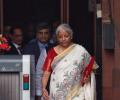
Union Finance Minister Nirmala Sitharaman is often known for making statements with her sarees on Budget Day. Each year, she wears a saree that represents India's rich textile heritage and traditional craftsmanship, and this year was no different. This year, Sitharaman chose to wear a beautiful off white saree with intricate golden work, paired with a red blouse and a shawl while carrying her trademark 'bahi-khata', a tablet wrapped in a red-coloured cloth with a golden-coloured national emblem embossed on it.

MeitY is in discussions with global Fortune 500 and Fortune 1000 companies, mid-tier firms, and state government officials on a three-pronged approach to setting up new GCCs in India.

'The finance minister missed yet another opportunity to simplify the income tax structure in the Budget.' 'This was an opportune moment to get rid of the old tax system entirely and move fully to the new system,' asserts M Govinda Rao, member of the 14th Finance Commission.

'Spend, but create assets, spend but make sure that people benefit from it.' 'This has been a beautiful guiding principle. And I think as a finance minister I owe so much to the prime minister for keeping this path clear before us.'
As it gains commercial viability, the food will likely become a powerful political currency.

India fully utilised its military modernisation budget in 2024-2025 -- the first time in five years -- and signed a record Rs 2 trillion defence contracts.

Ahead of the upcoming budget, eminent economists during a meeting with Prime Minister Narendra Modi on Thursday urged the government to take steps to accelerate economic growth and improve infrastructure, sources said. The meeting was organised by the NITI Aayog on Thursday to elicit views and suggestions of economists for the first budget of the Modi 3.0 government. "Earlier today, interacted with eminent economists and heard their insightful views on issues pertaining to furthering growth," Modi said in a post on X.
Finance Minister Nirmala Sitharaman on Tuesday announced income tax relief for the middle class, a Rs 2 lakh crore outlay for job creation schemes over the next five years and a spending splurge for states run by her party's new coalition partners as she unveiled the Modi 3.0 government's first budget after the general elections.

Budget 2025 lays down a transformational roadmap for India's digital and economic future, focusing on AI-driven enterprise modernisation, workforce skilling, and sustainable innovation. With bold investments in AI, digital infrastructure, and ease of doing business, the government has set the stage for businesses to scale, innovate and compete on a global level.

The TMC-led West Bengal government has already started laying the groundwork for the election, setting the tone with the recent Bengal Global Business Summit and the state Budget.

The interim budget 2024-25 on Thursday allocated Rs 202868.70 crore to the Ministry of Home Affairs (MHA) with the highest share of funds going to the paramilitary forces like Central Reserve Police Force (CRPF), Border Security Force (BSF) and Central Industrial Secular Force (CISF), showing priority on internal security and border guarding.

'Our vision is to innovate as many products as we can and solve as many problems as possible.'

"Commonwealth Games in India would leave lasting impact by boosting tourism, and creating jobs, the Government said in a statement.
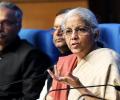
The eighth Budget of Finance Minister Nirmala Sitharaman continued to focus on 'GYAN' (Garib, Youth, Annadata, Nari) to maintain a consistent and coherent strategy initiated over the years in pursuing the government's vision for Viksit Bharat. The approach, characterised by incremental yet impactful steps, aims to create a compounding effect over time.

Indian fintechs and associated entities are hoping that the Union Budget 2024 will provide a boost and empower firms to extend their reach beyond Tier-II regions, with an emphasis on supporting enterprises led by women. The fintech industry, which has witnessed regulatory reforms over the last year, expects the Budget, scheduled to be presented by Finance Minister Nirmala Sitharaman on February 1, will further encourage financial inclusion, empower micro-small-medium enterprises (MSMEs) with lending solutions, and push for upskilling initiatives for the country's young workforce.

India's goods exports rebounded in July after two months of contraction, with outbound shipments rising 7.3 per cent to $37.24 billion, led by a surge in exports to the United States before the country's reciprocal tariff kicked in and bolstered by a recovery in exports to other key markets.

Belying expectations, Finance Minister Nirmala Sitharaman did not tinker with the personal income tax rates in the Budget for 2022-23.

In a continued push to spiritual tourism, there will be a focus on destinations related to the life and times of Lord Buddha.
Having missed the target for the current financial year, Finance Minister Nirmala Sitharaman on Saturday proposed to spend Rs 11.21 lakh crore towards capital expenditure (capex) for FY26. However, the capex target is going to be missed by about 93,000 crore for the current financial year.
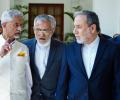
India has no intention to escalate tensions with Pakistan, but any military attacks on its soil will be met with a "very" firm response, External Affairs Minister S Jaishankar said on Thursday. Jaishankar made the remarks at a meeting with Iranian Foreign Minister Abbas Araghchi, emphasizing that the "barbaric" Pahalgam terror attack compelled India to carry out strikes on "cross-border" terror infrastructure on Wednesday. He reiterated that India's response was targeted and measured, but stressed that any further military attacks would be met with a firm response. The Iranian foreign minister, who landed in New Delhi amidst escalating tensions between India and Pakistan, called for de-escalation of the situation and stressed the need for regional cooperation to eradicate terrorism. The meeting also focused on boosting ties in areas of trade and investment, including the Chabahar port project.
